Class Action vs Google · upheld by the Court of Milan
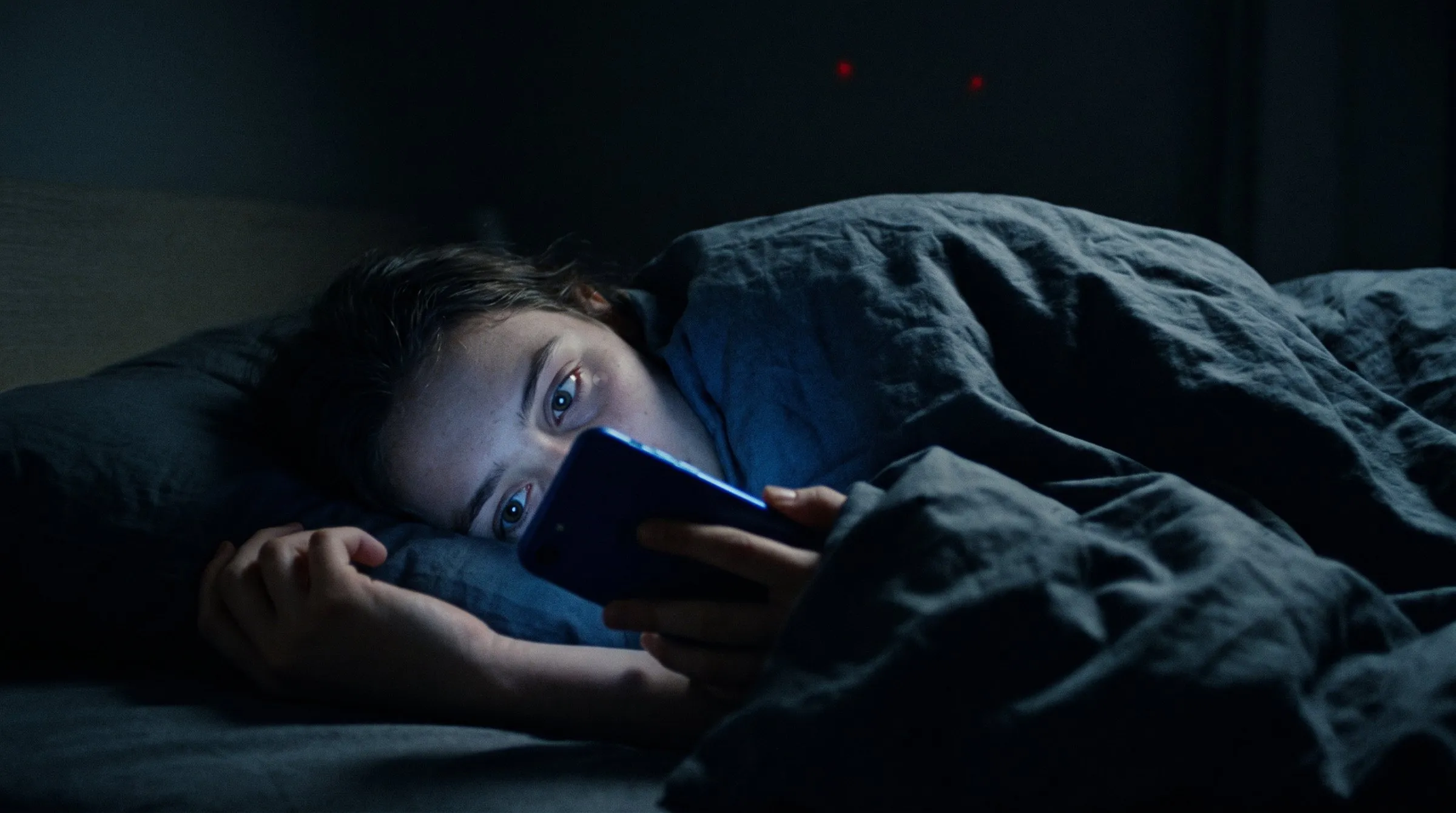
A teenager in bed in the dark, face lit by a phone screen.

A new Algopolio area

Digital addiction

The problem isn’t how long we spend online.It’s how we’re designed to stay.

Infinite scroll, notifications, variable rewards: platforms are built to keep us hooked, and young people are the most vulnerable. Here you’ll find our analyses, the data, the signs to look out for and where to get help.

Our view[01]

A system designed to hold on

«We are not looking at excessive individual use, but at a system designed to generate excessive use.»

— Algopolio Observatory · translated from Italian,«Digital detox: il problema non è quanto stiamo online, ma come siamo progettati a restarci»
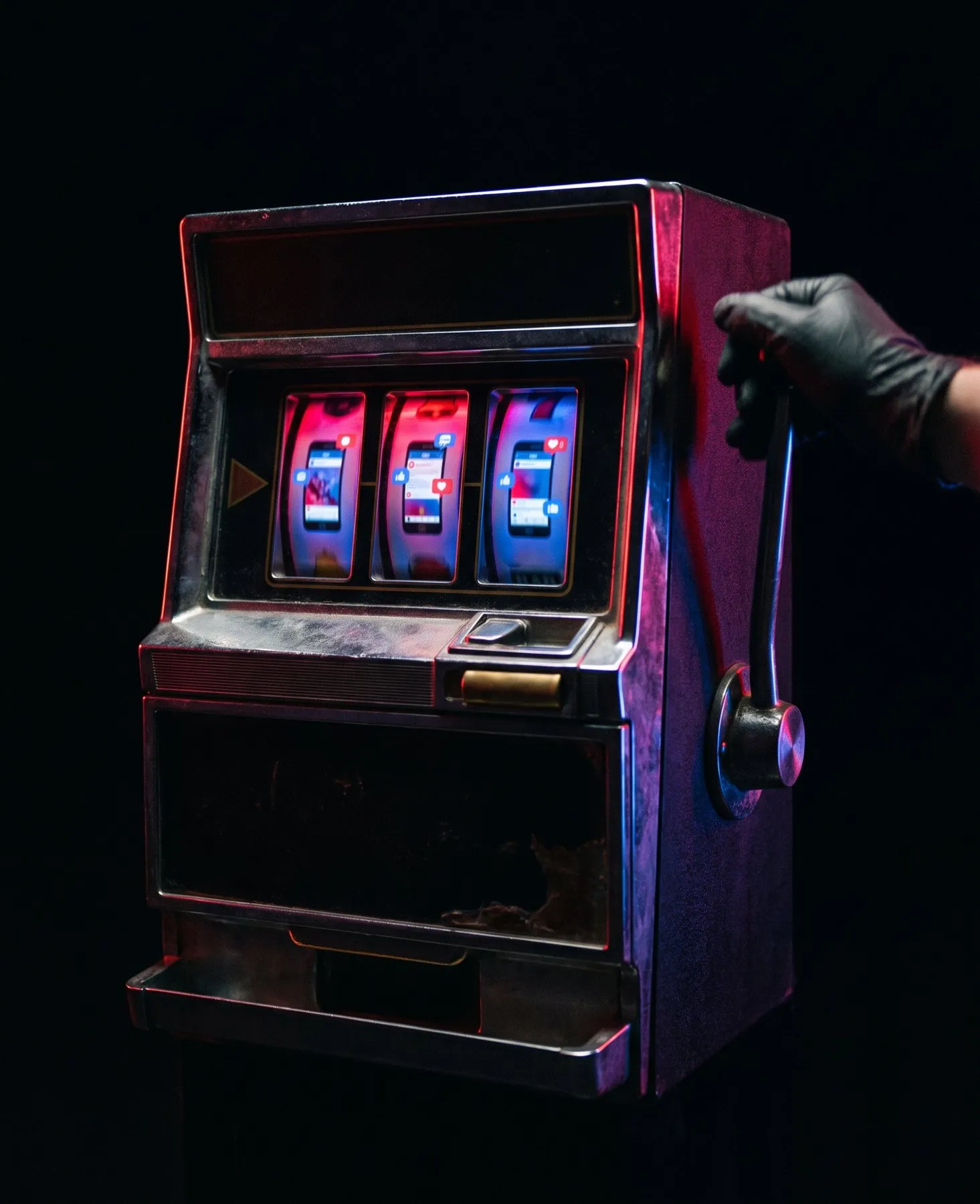
An old slot machine whose reels show social-media screens with hearts, likes and comments instead of symbols. A gloved hand grips the lever.

«Design is not neutral. It is a choice.»

Algopolio Observatory · translated from Italian · «Minori, dipendenza e responsabilità delle piattaforme»

  1. Time is not neutral

    Digital time is not the same as analogue time: it is built, optimised and geared to keeping us there.

  2. The false individual fix

    Switch off, disconnect, do a detox: it is only a partial answer, because the problem is still there the moment we step back into the system.

  3. The political knot

    Well-being cannot depend on our ability to escape a dysfunctional environment for a while. What needs rethinking is the digital architecture that makes a detox necessary.

«Digital addiction is a vitally important issue, and one that we, as an association, must keep watch over.»

Prof. Vincenzo MorabitoPresident of Algopolio · translated from Italian
Anatomy of a feed[02]

Anatomy of a feed

Seven design mechanisms you meet every day in apps: how they work, why they hold on to you and which EU rules deal with them.

Tap the numbers on the phone, or open the items in the list.

01Infinite scrollThe feed never ends.

Read the explanation
  1. There is no bottom of the page, so there is no natural moment to stop: when one post ends, the next is already there. The decision to stop never comes from the interface. It is left entirely to you, every single time.

    Relevant EU rules

    DSA · Art. 25
    Online platforms must not design their interfaces in a way that deceives or manipulates users, or that otherwise materially distorts or impairs their ability to make free and informed decisions.
  2. The next video begins before you have decided whether you want to watch it. Carrying on is the default; stopping takes an extra step.

    Relevant EU rules

    DSA · Arts. 34–35
    Very large platforms must assess and mitigate the systemic risks of their services, including those arising from their design, also with regard to the protection of minors and people’s physical and mental well-being.
  3. Red badges, buzzes, “someone reacted to your post”: personalised notifications reopen the app at moments chosen by the system, not by you. Every call-back interrupts whatever you were doing.

    Relevant EU rules

    DSA · Art. 28
    Online platforms accessible to minors must put in place appropriate and proportionate measures to ensure a high level of privacy, safety and security for them.
  4. Pull-to-refresh works like the lever of a slot machine: sometimes something new appears, sometimes nothing. It is the uncertainty itself that makes you try again. Psychologists speak of “intermittent reward”.

  5. Hearts, views, followers: other people’s approval is counted and shown to everyone. When a young woman won her case against Meta and Google, the words heard in court painted a clear picture: constant exposure, a need for approval, growing isolation.

  6. A flame, a counter of consecutive days: a streak turns a habit into an obligation. You don’t open the app because you need it, but so as not to lose what you have built up.

    Relevant EU rules

    DSA · Art. 28
    Online platforms accessible to minors must put in place appropriate and proportionate measures to ensure a high level of privacy, safety and security for them.
  7. What you watch, how long you linger, what you like: every signal teaches the system what keeps you glued, and the feed serves you more of it. As the Observatory puts it, personalisation is not a service: it is a retention lever.

    Relevant EU rules

    DSA · Art. 38
    Very large platforms must offer at least one option of their recommender system that is not based on profiling.
    AI Act · Art. 5
    Prohibits AI systems that exploit vulnerabilities due to age to materially distort people’s behaviour, where this causes or is reasonably likely to cause significant harm.

DSA Arts. 25 and 28 apply to online platforms; Arts. 34, 35 and 38 only to very large ones, with at least 45 million monthly active users in the EU. Plain-language summaries of the rules: not legal advice.

Warning signs[03]

Signs, not a diagnosis

These are the signs reported by Il Gazzettino in its article on the S-collegati help desks of the Usl della Marca health authority, in Treviso. They help you notice, not label.

  1. Lost sleep

    Sleeping less to stay connected.

  2. Irritability without the device

    When the phone isn’t there, tension rises.

  3. Mood swings

    A mood that goes up and down.

  4. Falling school performance

    Results at school get worse.

If you recognise them

A sign is not a diagnosis. If you recognise them in your son, your daughter or yourself, talk to a professional: your family doctor or paediatrician, or the addiction service (SerD) of your local health authority (ASL).

Where to get help

SourceIl Gazzettino · Treviso«Dipendenza dal cellulare, 194 ragazzini in cura in 6 mesi. «I sintomi? Meno sonno e più irritabilità». La guida per le famiglie»02 Sep 2026 · Mauro Favaro ↗(opens in a new tab)

Facts & news[04]

Facts & news

What happens in Italy when families ask for help: the figures and services reported by the press, each with its source.

· Mauro Favaro

Il Gazzettino · Treviso

«Dipendenza dal cellulare, 194 ragazzini in cura in 6 mesi. «I sintomi? Meno sonno e più irritabilità». La guida per le famiglie»

The S-collegati help desks of the Usl della Marca health authority (Treviso), active since 2021, followed 194 young people with digital-addiction problems in the first six months of 2026. Warning signs include lost sleep, irritability when the device is missing, mood swings and falling school performance. Young people are offered five brief cognitive-behavioural sessions; parents get guidance on organising time and space at home.

«Strumenti costruiti per conquistare continuamente la loro attenzione»

— Stefano Camarotto, presidente Cna Unimpresa Treviso
Read on Il Gazzettino · Treviso (Italian)(opens in a new tab)

Figures reported

young people followed in six months (Usl della Marca)
194
consultations with parents
122
consultations with young people
36
consultations with teachers
26

Il Gazzettino · Treviso · 02 Sep 2026

ANSA · Toscana

«A Firenze primo centro in Italia per il contrasto alle dipendenze digitali»

Florence launches “Discover”, presented as Italy’s first centre to counter digital addiction: young people aged 10 to 25, at the Biblioteca Chiarugi in San Salvi, run with the Asl Toscana Centro health authority, the City of Florence and the ReteSviluppo cooperative. No bans but guided disconnection: board games, hands-on workshops, group activities and support for parents; pilot phase until December 2026.

Read on ANSA · Toscana (Italian)(opens in a new tab)

Figures reported

years: the centre’s age range
10–25
dedicated centre in Italy, according to ANSA
1°

ANSA · Toscana · 22 Jul 2026

Observatory · Social media, minors & addiction12 analyses on this topic

Our analyses

We read the news on this topic from the citizens’ side. Newest first. The Observatory’s analyses are published in Italian.

Where to get help[05]

Where to get help

It is nobody’s fault, and you are not alone. Public services exist: here is where to start.

Algopolio does not provide medical or psychological advice: these pointers are meant to direct you to people who can.

  1. The first step

    Your family doctor or paediatrician

    The first point of contact with the national health service: they can listen, assess and refer you to local services.

  2. The public service

    The SerD of your local health authority

    The SerD (Servizi per le Dipendenze) are the public addiction services of Italy’s local health authorities (ASL). Addresses, contacts and how to access them are on your ASL’s website.

  3. Local projects

    Dedicated services already running

    Two examples reported by the press. If you live elsewhere, ask your ASL whether similar services exist.

    • Usl della Marca · Treviso

      S-collegati

      Help desks active since 2021. For young people, five brief cognitive-behavioural sessions; for parents, consultations and guidance on organising time and space at home. In the first six months of 2026 they followed 194 young people.

      SourceIl Gazzettino · Treviso, 02 Sep 2026 ↗ (opens in a new tab)

    • Florence · Biblioteca Chiarugi, San Salvi

      Discover

      Presented as Italy’s first centre to counter digital addiction, for young people aged 10 to 25, run with the Asl Toscana Centro health authority, the City of Florence and the ReteSviluppo cooperative. No bans, but guided disconnection: board games, hands-on workshops, group activities and support for parents. Pilot phase until December 2026.

      SourceANSA · Toscana, 22 Jul 2026 ↗ (opens in a new tab)

Opening hours, contacts and access may change: always check the health authority’s official channels.

If someone is in immediate danger, call 112, the European emergency number.

A tunnel of feed screens rushing towards the viewer; an open hand in the foreground stops it.
What Algopolio does[06]

A matter of rights

Digital addiction is not only a health or education issue: it is about the power of those who design the environments we grow up in. That is why it is a fight for digital rights.

  1. The interface is not neutral

    It is a behavioural device: it designs attention, steers time and shapes experience.

    From the analysis (Italian)«Scroll infinito, dipendenza finita?»
  2. Responsibility does not lie only with users

    When a system is designed to create addiction, responsibility cannot fall only on the people who use it.

    From the analysis (Italian)«La prima crepa: quando i social vengono giudicati come il tabacco»
  3. Structural obligations are needed

    Protecting minors cannot rest on symbolic measures: it takes responsible design, clear limits on profiling minors and transparency about recommendation algorithms.

    From the analysis (Italian)«Minori, dipendenza e responsabilità delle piattaforme»

What we do

We follow the issue in our Observatory, collect the stories of people who live it and call for rules that address design, not just content.

Rights you can use

The table of 24 rights

Your experience

An app that won’t let go, a child who can’t put the phone down, a design that feels unfair: every story helps us understand and stand up for everyone’s rights.

Share your experience

Journalists

The association’s press releases and press coverage, including on digital addiction.

Press room

This page ends here.

An infinite-scroll feed, by design, never ends. Here, you decide when to stop.

Your tally, on this page

metres scrolled
0.0
min on this page
0:00
Back to the top